An American Heritage: Mail Pouch Barns
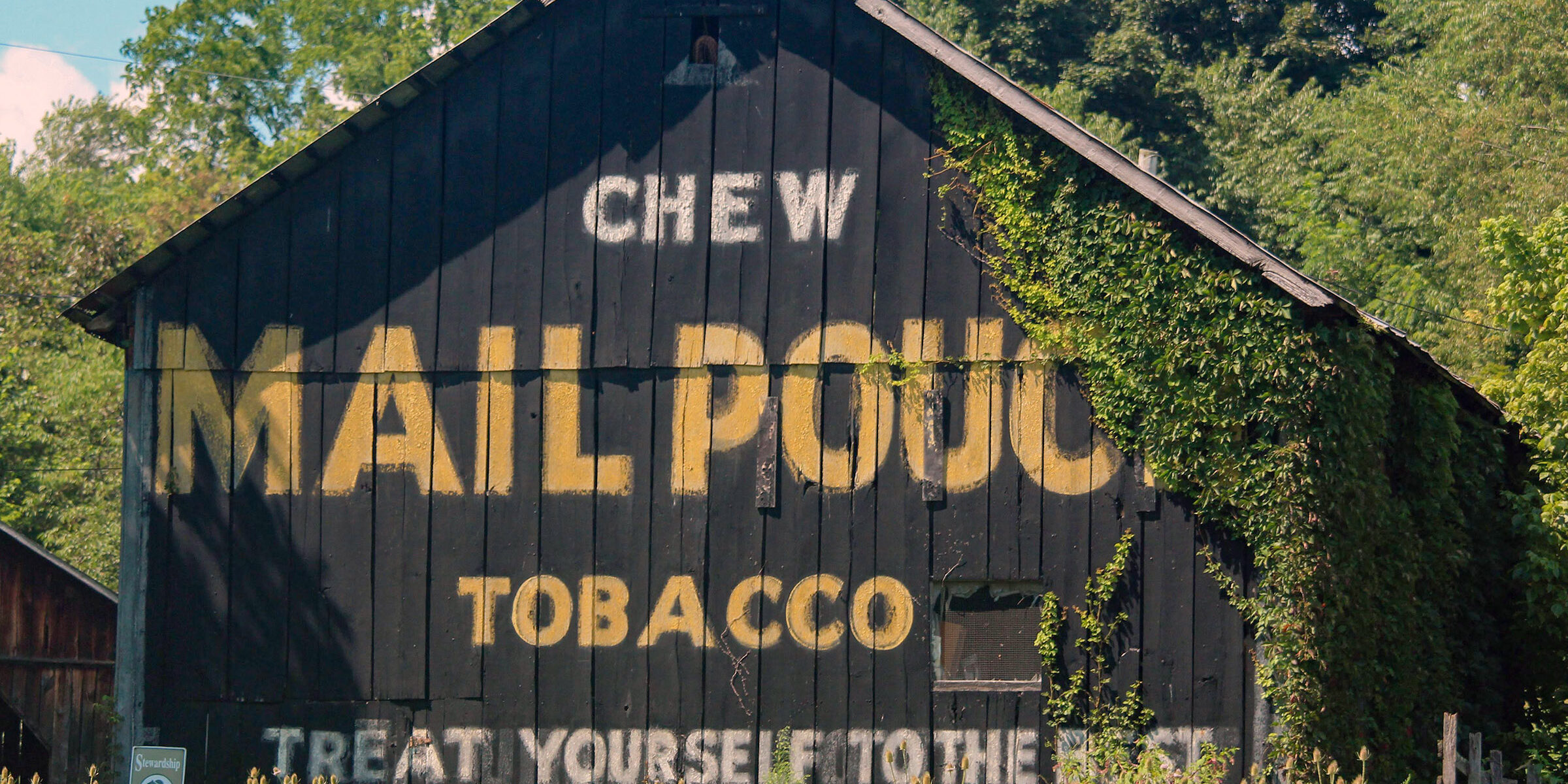
For more than a century, one advertising campaign took an unusual approach to getting its message out: “Chew Mail Pouch Tobacco: Treat Yourself to the Best.” Painted on barn sides first regionally, then across the country, this slogan was the hallmark of the Bloch Brothers Tobacco Company of Wheeling, West Virginia.
Before billboards became widespread, companies turned to the sides of barns and buildings to reach the public. Mail Pouch Tobacco ads first appeared on barns in 1892 and peaked in the 1960s, with approximately 20,000 barns across 22 states proudly displaying the message. Traditional Mail Pouch Barns featured yellow and white lettering on backgrounds of red, black, brown, gray, or brick, often trimmed in blue to display the initials of the painter and the date of completion.
When billboards began appearing nationwide in the late 1930s, Mail Pouch chose to remain loyal to barn advertising. As other companies switched to billboards, Mail Pouch acquired more barns, resulting in a striking number of displays along highways.
Harley Warrick of Belmont, Ohio, became a legendary figure in this campaign. Joining a crew of barn painters in 1946 after returning from World War II, Warrick is credited with painting or retouching over 20,000 Mail Pouch signs. Each barn took roughly six hours to complete, with painters often beginning with the letter “E” in “Chew.” Other notable painters included Mark Turley, Don Shires, Dick Green, and several others.
In 1965, the U.S. Highway Beautification Act banned billboards and other advertisements within 660 feet of federally funded roads, effectively ending much of the Mail Pouch campaign. However, nine years later, the law was amended to exempt Mail Pouch Barns as “landmark signs,” recognizing their historical and cultural significance.
Warrick continued painting and touching up hundreds of barns annually until his retirement in 1992, marking the end of the campaign. When he passed away in 2000, he was widely regarded as the last of the Mail Pouch Barn painters. For more about his life and work, see The Barn Painter, co-written by Harley and his son, Roger.
Many of the barns were located in coal mining areas, as miners were some of the company’s best customers. Although smoking was not permitted underground, miners believed chewing tobacco helped reduce dust in the work environment.
In Greene County, at least thirty Mail Pouch Barns once lined major routes, including Routes 21, 19, 18, and 88. Today, only seven remain, preserved on private property, standing as enduring reminders of a unique piece of American advertising history.