
The Foundation of Our Frontier
Greene County’s Story
On February 9, 1796, Greene County, Pennsylvania was officially established as its own county. Since the beginning of settlement in the states, it has developed rich history and heritage. From past to present, it has been home to generations of families, the foundation of local businesses, and a place to receive higher education.

From Colony to County
When settlers crossed the Atlantic from Great Britain, they arrived along the eastern coast of what is now the United States. As they explored the land, they gradually established settlements that, over time, became the first 13 American colonies. Beginning as early as 1607, claims were staked, boundaries took shape, and the foundations of future states were formed.
The first colonies included Virginia, Massachusetts, New Hampshire, Maryland, Connecticut, Rhode Island, Delaware, North Carolina, South Carolina, New York, New Jersey, Pennsylvania, and Georgia.
The area now known as Greene County, Pennsylvania, is located in the southwestern corner of the state and has a long and shifting history of governance. Over time, the land was part of several counties, including Westmoreland, and was also caught in a border dispute between Virginia and Pennsylvania. This dispute was resolved in 1783 with the establishment of the Mason-Dixon Line. Following early settlement in the region beginning around 1764, the area became part of Washington County as Pennsylvania continued to expand westward. In 1796, in response to residents who felt the county seat in Washington, Pennsylvania, was too far north, an Act of the Pennsylvania Legislature officially established Greene County as its own separate county.

Names that Shaped the County
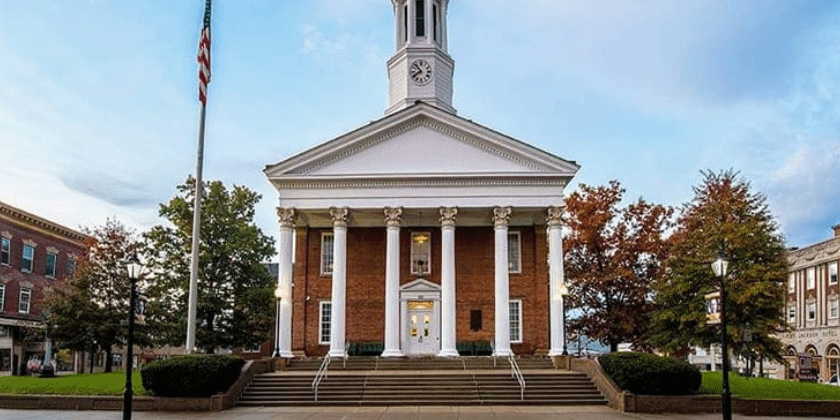
Nathanael Greene was one of George Washington’s greatest generals over the course of the American Revolution. Due to his contribution to American Independence, Greene County was named in honor of him and his statue stands at the top of the Greene County Courthouse in the center of High Street. There are 14 counties in the United States named after Revolutionary War General Nathanael Greene.
Waynesburg was named in honor of Major General Anthony Wayne. The community was laid out in 1796 and later incorporated as a borough on January 29, 1816. Wayne was a prominent military officer who served during the American Revolution and was known for his bold, aggressive leadership, earning him the nickname “Mad Anthony.”

Our Prominent Settlers
Colonel John Minor of Mapletown is known to be the “Father” of Greene County, Pennsylvania. In 1790, he was elected as a Representative for the state, and just six years later, his petition to separate Greene County from Washington County was granted.
James Hook was a military man from Fredrick, Maryland and was the first sheriff of Greene County. He fought in the Indian Wars, was the Captain of the Virginia Militia, and served in the Continental line. Hook also signed the Pennsylvania-Virginia land dispute when it was brought to Continental Congress.
Reverend John Corbly was the man who brought Baptism to the Greene County area from Virginia. He founded 30 churches in Southwestern Pennsylvania, including the John Corbly Memorial Baptist Church in Garards Fort, Pennsylvania.
Hook, Minor, Corbly were among the first settlers in Greene County during the Revolutionary War.
A prominent face at our nation’s capital for several years was Isaac Weaver Jr. from the Muddy Creek area. He began serving in the House of Representatives in 1797, then as Speaker of the House in 1800. He went on to serve as treasurer in 1803, and Speaker of the Senate in 1817. He was also the first Speaker of the House elected that was west of the city of Philadelphia.

An Agricultural Powerhouse
With its rolling hills and open land, the area was well suited for agriculture. Greene County ranked eighth among Pennsylvania counties as a leading farming region, where farmers thrived from 1894 to 1905. In addition to crop production, Greene County also led the state in wool production, boasting some of the highest sheep populations in Pennsylvania.
As natural gas became more abundant and bituminous coal mining expanded, Greene County once again rose to prominence. By 1902, it had become one of the state’s highest-producing counties.
A Commitment to Education
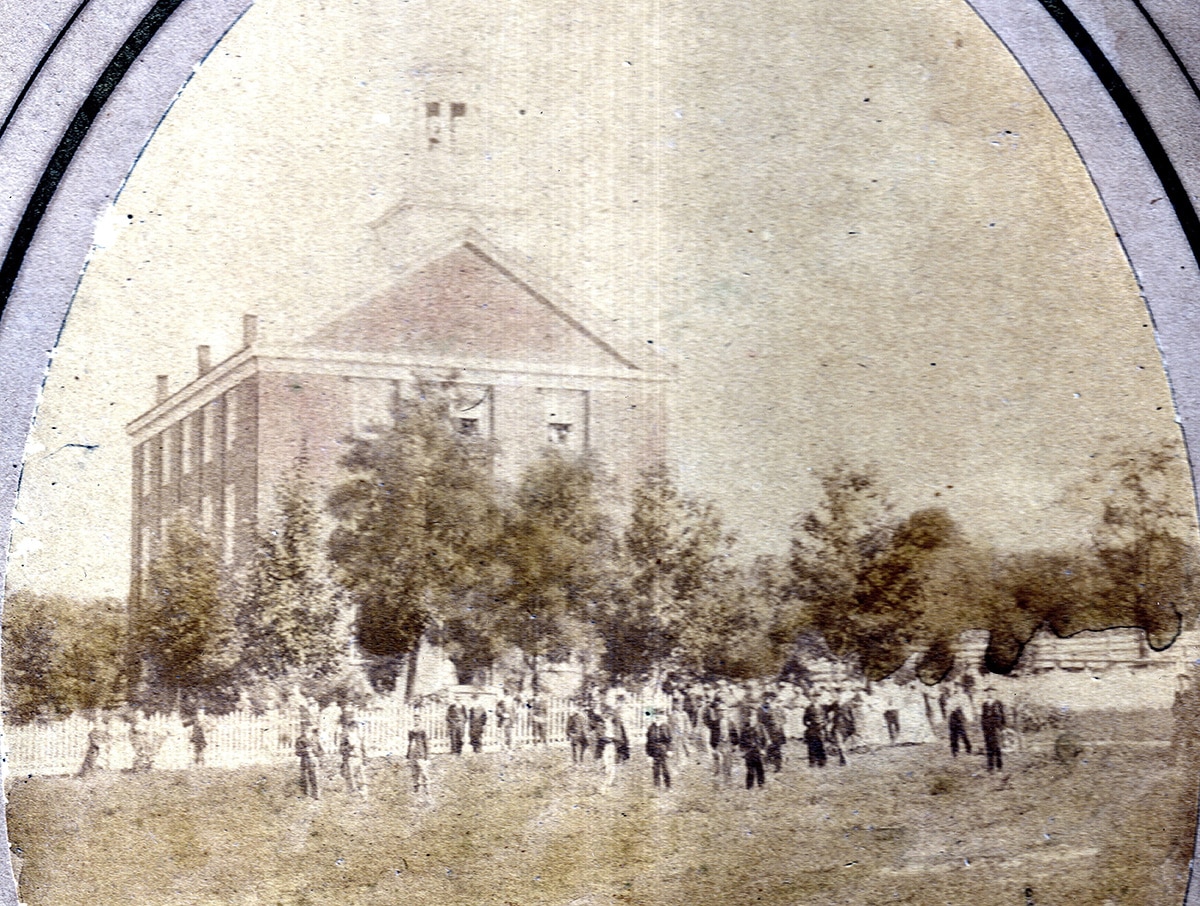
Greene County was once crawling with one-room schoolhouses. Here, students learned until about the eighth-grade level, but some wanted more. In March of 1810, the Greene Academy opened its doors with the initiative to further education in the area. It stayed in operation for 55 years before closing in March of 1865.
Two other institutions opened doors to provide more educational opportunities to those in the area. Waynesburg College was founded in 1849 and held its first classes in Hanna Hall. It is still in operation today as a Christian university that is based off the three pillars of faith, service, and learning.

Service and Sacrifice
Greene County was represented in the National Guard of Pennsylvania in 1886 with the formation of Company K. They participated in the Mt. Pleasant Coke Strike of 1891 and the Homestead Strike of 1892. Out of the members of Company K, 46 men joined 7 other companies and were known locally as the Waynesburg Blues.
The Grand Army of the Republic was formed in the 1880s and was one of the most important organizations from its founding up until the 1890s. It was a veteran’s organization for those who fought for the union during the Civil War.
To explore all of Greene County’s veteran monuments, click here for the ultimate driving tour.

Where History Lives On
From its early days as disputed land to the establishment as an independent county, Greene County’s story is one of growth, resilience, and lasting impact. Shaped by significant leaders, sustained by agriculture, strengthened through education, and defended by those who served, the county has continually adapted while honoring its roots. Today, Greene County stands as a testimony to the people and traditions that built it, past and present, preserving a heritage that continues to build and define its identity.